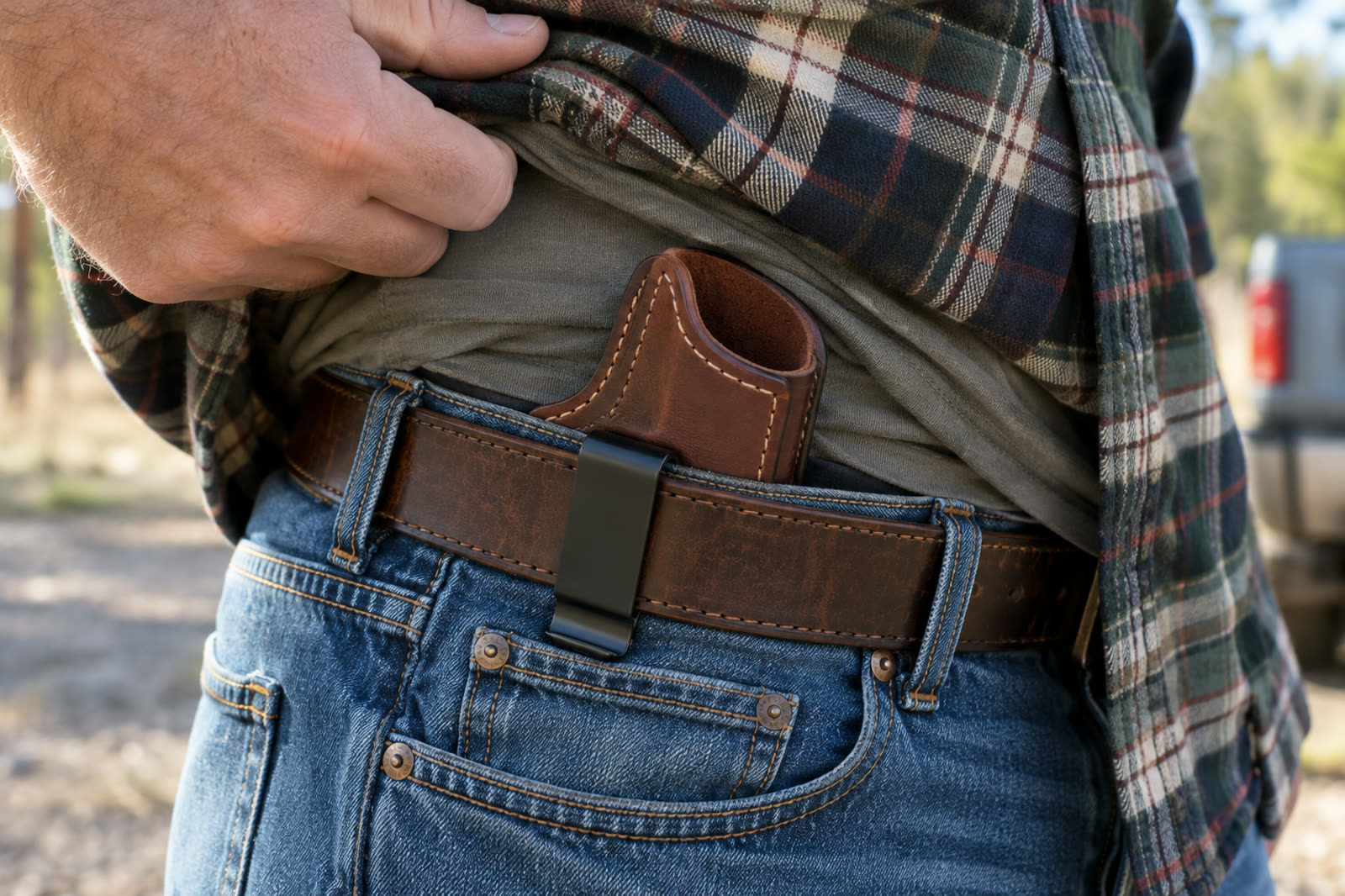
Crossing State Lines: What to Know About Permit Reciprocity
Your permit may travel with you, or it may not. A careful traveler’s guide to recognition, restrictions and planning ahead.
A concealed carry permit is issued by one state, but highways do not stop at the border. If you carry and you travel, sooner or later you will need to answer a simple-sounding question: does my permit count here? The answer depends on reciprocity, a patchwork of agreements and recognition laws that differs from state to state and changes over time.
This guide explains the core ideas so you can plan a trip responsibly. It is general information, not legal advice. Always check the current rules of every state you will enter.
What reciprocity actually means
In everyday use, “reciprocity” describes whether one state honors a permit issued by another. Strictly speaking, there are a few different arrangements:
- Reciprocal agreements. Two states formally agree to honor each other’s permits.
- One-way recognition. A state honors permits from some or all other states without requiring those states to return the favor.
- No recognition. A state does not honor out-of-state permits at all, so visitors must hold that state’s own non-resident permit, if it offers one, or not carry.
Some states attach conditions. A state may recognize another state’s permit only for holders who are residents of the issuing state, or only for holders above a certain age. That means two people carrying the same type of permit could be treated differently depending on where they live.
Permitless carry states and visitors
Many states now allow eligible adults to carry without a permit. Whether that extends to visitors varies. Some permitless carry states apply it to anyone who may lawfully possess a firearm, while others limit it to residents or attach other conditions. Never assume that a state’s permitless carry law covers you as a traveler. Read the details.
The rules travel with the place, not the person
This is the principle that trips up careful people. When a state honors your permit, you generally must follow that state’s laws while you are there, not your home state’s. That can include:
- Restricted locations, which differ from state to state. A place where carry is allowed at home may be off-limits across the border.
- Duty to inform. Some states require you to tell a law enforcement officer that you are carrying during a stop. Others do not.
- Vehicle carry rules, which can differ from on-body carry rules.
- Restaurants and alcohol. Rules about carrying where alcohol is served vary considerably.
- Equipment and ammunition restrictions. Some states limit magazine capacity or certain types of ammunition.
Planning a trip, step by step
- Map your route. List every state you will enter, including the ones you only pass through.
- Check recognition for each one. Use each state’s official sources, such as the state attorney general or state police website. Third-party maps are a convenient starting point, but confirm with official sources, since agreements change.
- Learn the key rules for each state: restricted places, duty to inform, vehicle rules and any equipment limits.
- Plan your stops. Think ahead about restaurants, rest areas, hotels and destinations, and whether you can carry there.
- Prepare a lawful storage plan for any place you cannot carry. A locked container secured in your vehicle is a common approach, but confirm what each state requires.
- Check again close to departure. If the trip was planned months ago, review the rules once more before you leave.
Passing through states that do not honor your permit
Federal law includes a provision intended to protect travelers who transport firearms through states where they could not otherwise possess them, as long as the traveler is going from one place where possession is lawful to another place where it is lawful. The protection generally depends on conditions: the firearm is typically required to be unloaded, and neither the firearm nor the ammunition should be readily accessible from the passenger compartment. In vehicles without a separate trunk, a locked container is generally expected.
This provision has limits, and how it applies in practice, especially during extended stops or overnight stays, has been the subject of legal dispute. If your route crosses a state with strict laws, research that state in particular and consider speaking with a qualified attorney before you go.
Flying with a firearm
Air travel follows its own rules. Generally, firearms may not be carried on your person or in carry-on bags. Lawful owners may transport unloaded firearms in checked baggage inside a locked, hard-sided case, declared to the airline at check-in. Airlines may add their own requirements for ammunition and cases. And when you land, the destination state’s laws apply to possession and carry. Check the current federal transportation security guidance and your airline’s policy before every flight.
National parks, federal buildings and tribal lands
Carry in national parks generally follows the law of the state where the park is located, but federal buildings within parks, such as visitor centers and ranger stations, are typically off-limits. Federal facilities in general prohibit carry with limited exceptions. Tribal lands may have their own rules. When your trip includes any of these, look up the specific rules for each place.
Non-resident permits
Some travelers obtain one or more non-resident permits from states that issue them, which can expand the number of states where they can carry. Whether this makes sense depends on where you travel and on the recognition rules involved, because some states honor non-resident permits and others do not. If you travel to the same places frequently, it is worth researching.
Key takeaways
- Recognition of permits varies by state and changes over time. Verify every state on your route with official sources.
- When you carry in another state, that state’s laws apply, including restricted places and duty-to-inform rules.
- Have a lawful storage plan for any place you cannot carry.
- Flying, national parks and federal facilities each have their own rules. Check them separately.
This article is general information, not legal advice. Laws vary by state and change over time, so check your state’s current rules with the appropriate official sources, and consult a qualified attorney about your specific situation. Home Guard Journal may receive compensation from partners featured on this site; see our Advertising Disclosure.