Choosing a Holster and Carry Method You’ll Actually Wear
Safety comes first, comfort comes a close second, and the best setup is the one you can wear consistently and correctly.
Experienced carriers often joke about the “holster drawer”, the collection of holsters they bought, tried for a while and set aside. The joke points to something real. Choosing a carry method involves trade-offs among safety, concealment, comfort and access, and the right answer depends on your body, your clothing, your daily routine and your training. This guide will help you think it through before you spend money, so the drawer stays small.
Non-negotiable: what every holster must do
Before style or comfort, a holster has jobs it must do every time:
- Cover the trigger guard completely. Nothing should be able to reach the trigger while the handgun is holstered: not a finger, not a shirt hem, not a jacket drawstring.
- Hold the handgun securely. The handgun should stay put through normal movement such as walking, sitting, bending and climbing stairs. This is called retention.
- Stay attached to you. The holster should not come out with the handgun when you draw. Sturdy clips or loops matter.
- Keep its shape. A holster that collapses when empty makes reholstering harder and less safe. Rigid materials help.
- Fit your specific handgun. Generic, one-size-fits-many holsters often fail one or more of these tests.
Any holster that fails one of these points should not be used, however comfortable it is.
Common carry positions
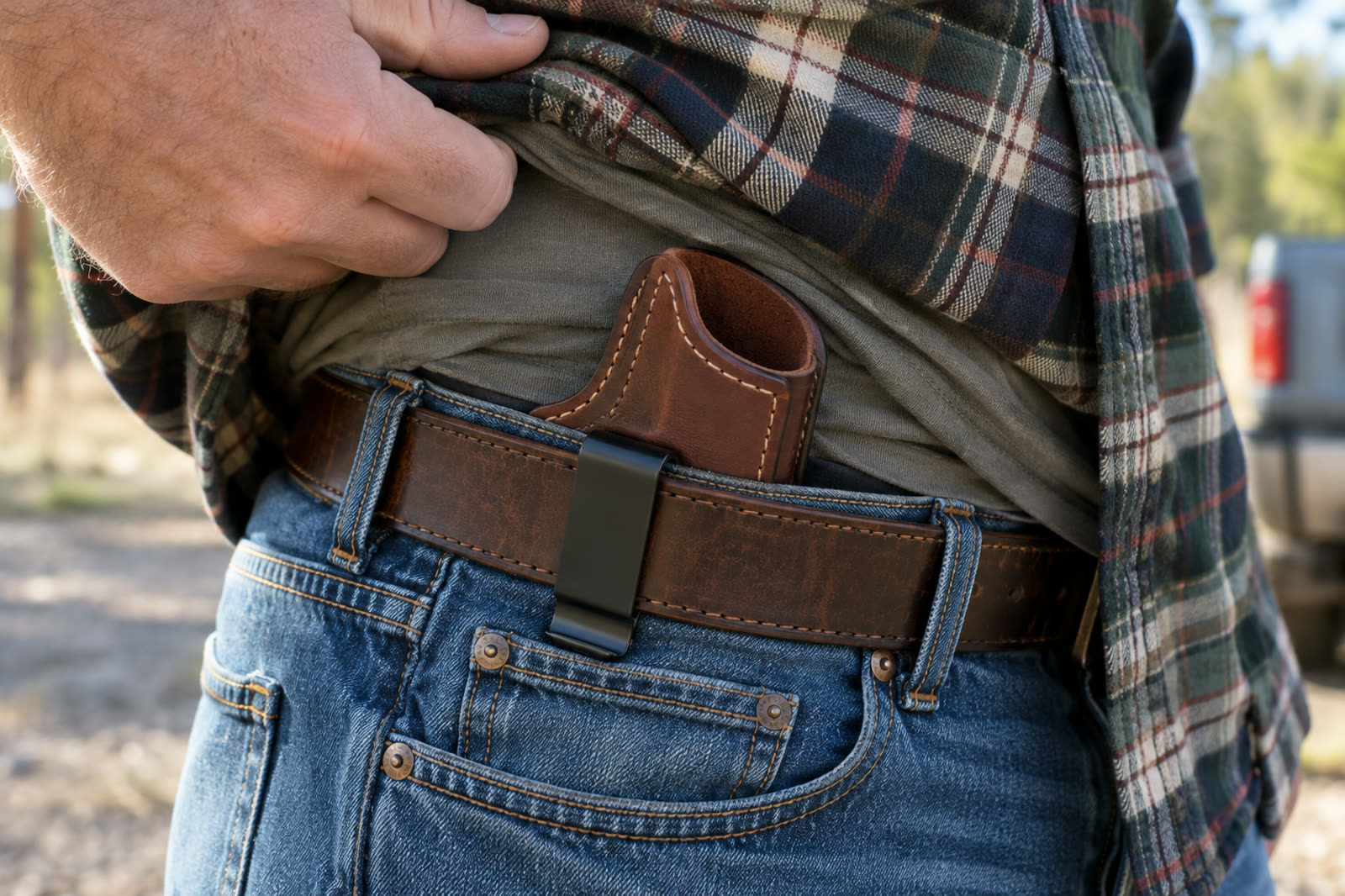
Inside the waistband (IWB), strong side
Worn inside the pants on the dominant-hand side, usually around the hip. It conceals well under an untucked shirt and is one of the most common choices. Sitting comfort varies with body type and holster design.
Appendix inside the waistband
Worn inside the waistband at the front of the body. Many people find it conceals well and allows a quick, natural draw. Because the muzzle points toward the body when seated, it demands a high-quality holster and especially careful reholstering technique. Training with a qualified instructor is strongly recommended.
Outside the waistband (OWB)
Worn on the belt outside the pants. It is often the most comfortable and the easiest to draw from, but it needs a cover garment, such as a jacket or long overshirt, to conceal. Many people use it in cooler months.
Pocket carry
Suitable for some small handguns, and only in a dedicated pocket holster that covers the trigger guard and keeps the handgun oriented the same way every time. Nothing else should share that pocket.
Off-body carry
Purses, bags and packs designed for carry. This method is popular with people whose clothing does not suit on-body carry, but it comes with serious responsibilities: the bag must remain under your control at all times, and a bag can be snatched, set down or left behind. If you choose off-body carry, use a bag with a dedicated, structured holster compartment.
The belt matters more than you think
A soft, everyday dress belt will let a holster sag, shift and print through clothing. A purpose-made carry belt, stiffened leather or reinforced nylon, holds the weight steady and keeps the holster where you trained to find it. Many experienced carriers say that upgrading the belt solved problems they had blamed on the holster.
Materials: leather, polymer and hybrids
- Leather is traditional and comfortable once broken in. Quality leather holsters can be excellent, but watch for leather that softens or folds over time, especially near the mouth of the holster.
- Molded polymer holsters are rigid, durable and consistent, and they hold their shape for reholstering.
- Hybrids pair a polymer shell with a leather or fabric backing for comfort against the body.
Whatever material you choose, inspect your holster regularly for wear, cracks, loose screws or softened areas.
Clothing and concealment
Concealed means concealed. “Printing”, where the outline of a handgun shows through clothing, can alarm people around you and, in some places, create legal issues. Slightly looser shirts, darker patterns and a sturdy belt all help. Try your setup in front of a mirror while sitting, bending and reaching overhead.
Practice the draw and the reholster
A holster is part of a system that includes your training. Practice drawing and reholstering slowly and deliberately, with an unloaded handgun and with all ammunition kept out of the room, or under qualified instruction at a range. Reholstering deserves special attention: slow down, look the holster in, clear clothing out of the way and keep your finger off the trigger. There is never a reason to rush putting a handgun away.
Give it time before you judge
A new holster often feels awkward at first. Wear it around the house unloaded for a while, adjust the cant and ride height if the design allows it, and make small changes one at a time. If it still fails on comfort or concealment, the issue may be position, belt or clothing rather than the holster itself.
Key takeaways
- Every holster must cover the trigger guard, retain the handgun, stay attached and keep its shape.
- Choose a position that fits your body, clothing and routine, then train with it.
- A purpose-made carry belt is one of the most valuable upgrades you can make.
- Practice drawing and especially reholstering slowly and safely.
This article is general information, not legal advice. Laws vary by state and change over time, so check your state’s current rules with the appropriate official sources, and consult a qualified attorney about your specific situation. Home Guard Journal may receive compensation from partners featured on this site; see our Advertising Disclosure.